In Shakopee, trees are never just decoration. They shape how a property feels, they buffer wind, they cast shade over sidewalks and patios, and they influence lawn conditions more than people realize. When trees are healthy, yards look calmer, lawns stay greener, and storm damage is less likely to turn into a crisis. When trees are neglected, small issues quietly compound until a branch fails, a trunk splits, or roots start pushing into walkways and retaining walls.
I’ve handled a lot of tree work in the Minnesota River Valley, and the pattern is consistent: the best results come from regular health checks and pruning that matches the tree’s growth habits. The goal is not to make everything look “trim and perfect.” The goal is to manage risk, improve structure, and keep the tree functional for decades.
Why pruning in Shakopee MN is about more than appearance
Shakopee’s seasons turn tree maintenance into an ongoing rhythm. Spring brings fast leaf growth and new opportunities to spot problems. Summer tests branch spacing, canopy density, and how well the tree handles full sun and moisture swings. Fall shows what the tree does when temperatures drop and growth slows. Winter makes defects easier to see because leaves are gone, and structural pruning becomes clearer.
A lot of homeowners call for pruning because the tree “looks overgrown.” That’s a fair starting point, but I always ask a few practical questions first: Is the tree leaning? Are there dead branches aloft? Do you see wounds on the trunk or peeling bark? Is there rubbing where branches contact roofs, fences, or power lines? Do you smell rot or notice mushrooms near the base?
Pruning decisions hinge on the tree’s biology. Some species respond well to selective removal and thinning. Others should not be “shaped” aggressively because they recover poorly. Cut too much or cut in the wrong place, and you can create weak regrowth that breaks easier than what you removed.
If you’re also investing in landscaping design installation Shakopee, or upgrading lawn care Shakopee services, pruning needs to be part of the overall plan. A well-pruned canopy can change where sunlight reaches the ground, which affects turf density, how edging holds up, and how quickly new plantings establish.
The health check I’d do before touching a pruner
The best pruning job starts long before the first branch is cut. A true tree health check looks at structure, stress, and warning signs. Sometimes that means climbing. Sometimes it means staying on the ground with binoculars and a careful walk-around.
Here’s what I typically evaluate, using judgment and what I can observe safely:
- Structure and form: Where are the main limbs, and do they form tight, strong angles or long, weak connections? Does the canopy look balanced, or does one side carry most of the weight? Deadwood and weak points: Dead branches can hang on for a long time, especially on trees that have been growing despite stress. Deadwood often indicates internal decline. Cavities and wounds: Cracks, peeling bark, and old pruning scars tell you how the tree is compartmentalizing damage. If decay is expanding, pruning needs to be cautious, and sometimes the safest move is removal of specific sections. Bark condition and target areas: I pay attention to bark that’s missing or shredded, especially near the base or around visible injuries. In Minnesota winters, exposed tissue can worsen damage. Root and soil clues: Soil heaving, exposed roots, persistent mushrooms, and unusual leaning patterns can point to hidden stress. This matters even if the tree top looks “fine.”
A quick story from the field: one homeowner described their tree as “just messy.” On inspection, I found a cluster of small dead twigs in the crown, plus a hollow sound when a trunk area was lightly tapped and a visible wound low on the side facing the prevailing storms. The pruning that would have been cosmetic would have ignored the structure issue. We ended up doing targeted thinning and removal of specific weak limbs, and the tree improved in stability without turning into a bare, stressful canopy.
Pruning goals that actually reduce risk
In Shakopee, storm events are part of the background stress for trees. Wind gusts, heavy snow loads, and ice can shift weight across the canopy. Good pruning reduces the chance that branches fail under load, but it does so by correcting structure and removing the most hazardous components.
When I plan pruning, I usually align with one or more of these outcomes:
Clearance pruning to maintain safe distances from structures and traffic paths. Crown thinning to reduce sail effect in high winds, which can help prevent additional stress during storms. Crown raising to lift the canopy for walkways, patios, and mower access, without stripping the tree unnecessarily. Reduction pruning in a careful way, because “cut it smaller” is rarely the same as “cut it safer.” The key is to reduce load while preserving natural shape and avoiding oversized topping cuts. Health-driven selective pruning that removes dead, diseased, or compromised branches where the tree can respond.If the property also includes landscape edging Shakopee MN features, pruning has practical side effects. When branches overhang beds and paths, leaves trap moisture against edging and fabric, and that can accelerate deterioration of some materials. Raising and thinning can reduce that constant wet cycle.
Types of pruning decisions, explained in real terms
Homeowners often hear the term “pruning” and imagine a single action. In practice, pruning can mean several different techniques, and the choice depends on what the tree needs.
Selective pruning is usually the best fit for many mature trees. It focuses on specific branches, cuts back to appropriate points, and preserves the tree’s overall shape. Thinning removes selected branches so air and light can move through the crown. Raising removes lower limbs to provide clearance. Reduction reduces the size of the canopy where needed, but ideally it redirects growth to healthier, stronger structure rather than creating stubs.
Topping is one of the methods I strongly discourage unless there’s an urgent safety reason and even then, removal is often the better option. Topping can force the tree to produce dense new growth from weak points. That regrowth can look green and fast, but it often has poor attachment strength, so it may break during the next big weather event.
Timing matters, even when winter looks “quiet”
Minnesota winters can make homeowners assume pruning is impossible until spring. The reality is that some pruning work is easier in winter because leaves are gone and structure stands out. However, tree stress and local conditions matter.
In many cases, dormant-season pruning is a sensible time for certain types of work, especially structural corrective pruning and removal of dead branches. In other cases, it’s better to prune after active growth begins, or to avoid pruning request estimate during periods when stress is high.
A big practical note: when trees are in active decline or show significant internal issues, waiting for the “perfect” season can be risky. A weak branch over a driveway is not something you want to gamble with. Safety comes first. If the situation calls for urgent action, a trained crew can often manage the work responsibly, even outside ideal windows.
The specific things I look for in different scenarios
Every yard has its own pressure points. Some are obvious, like a tree leaning toward a garage. Others are subtle, like a canopy that’s too dense and keeps the inside of the tree perpetually damp.
1) Trees with deadwood in the crown
Dead branches can look minor, but if they’re distributed in the crown, the tree may be struggling with internal decay or stress. Removing small dead twigs at the ends might reduce clutter, but it doesn’t always address what’s causing the dieback. In those cases, the pruning plan needs to identify the most compromised branches and remove them to the extent that’s safe and appropriate.
A good crew doesn’t just “clean up.” They look for patterns: is it one localized section, or multiple areas? Are there signs of canker, repeated injury, or poor compartmentalization? That dictates how far to go.
2) Overhang near roofs, fences, and patios
When branches are rubbing against surfaces, the damage cycle accelerates. Bark can be worn down, openings invite insects and decay organisms, and the friction point can become a weak hinge. A clearance plan is usually not just one-time trimming. It’s a structured approach to ensure that future growth doesn’t immediately recreate the same problem.
If you’re also arranging lawn mowing service Shakopee schedules around landscaping work, clearance height becomes more than aesthetics. Low limbs can catch mowers, and heavy canopies can force mowing to happen less frequently because the area stays shaded and damp.
3) Trees near driveways and sidewalks
Here, the priority is often structural integrity and clearance. If roots are pushing, if the tree is lifting adjacent slabs, or if the ground is showing sudden grade changes, pruning might help overhead clearance but cannot fix root issues. That’s when I talk with homeowners about realistic expectations. Sometimes pruning is part of the solution, but sometimes removal or root-aware adjustments are the bigger need.
4) Leaning trees after storms
A tree that leans can be normal for many species, especially if it grew that way. But after a storm, a change in lean, fresh cracks, or new bark fractures are a different story. The decision point is whether the tree’s root plate is stable and whether weight distribution can be safely managed.
In those cases, pruning can be used as risk mitigation, but removal is sometimes the responsible choice. The difference comes down to what the tree’s structure shows and what the site conditions allow.
A practical pruning checklist homeowners can use
You asked about tree health checks and pruning, so here’s a simple homeowner version of what I look for during a basic walk-around. This is not a substitute for a professional assessment, but it helps you notice issues early instead of waiting for damage.
Look for dead branches in the upper canopy, especially if there are multiple clusters. Check the trunk base for mushrooms, soft spots, cracks, or wounds. Watch for repeated bark rubbing where limbs contact structures or fences. Pay attention to new leaning, sudden crown thinning, or heavy twig dieback. Inspect pruning scars from past work for canker-like discoloration or ongoing splitting.If you see two or more of these, it’s worth scheduling a health check rather than assuming “it’s fine, it’s just tall.”
How pruning affects lawn care and landscaping service planning
A lot of property owners think tree service is separate from lawn care Shakopee. In practice, they’re connected. Trees control light, moisture, and wind exposure. They also influence how quickly clippings dry, how long surfaces stay damp, and whether turf can maintain density in shade.
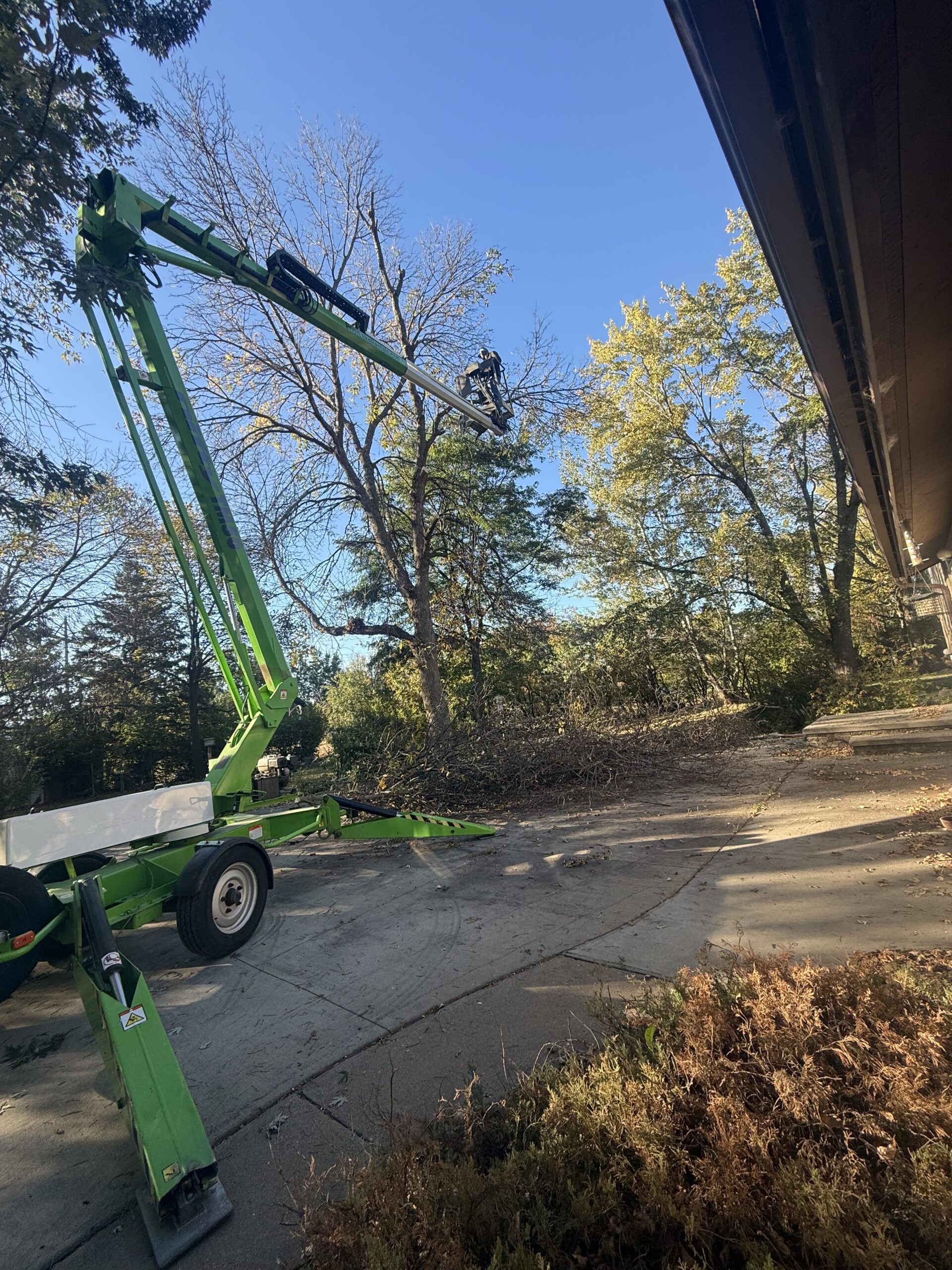
When you thin a canopy properly, you often get a noticeable improvement in turf viability beneath it. The grass still won’t like deep shade forever, but it can maintain better health when light penetrates and airflow reduces constant humidity. That can make mowing more consistent, reduce fungus pressure, and improve how edging holds up because leaves are less likely to smother bed edges.
If you’ve hired landscaping design installation Shakopee for new beds, pruning can also stabilize the planting layout. Shrubs and perennials are often chosen based on expected sunlight hours. A tree that’s allowed to grow unchecked can change those conditions in just a few seasons. Conversely, thoughtful pruning can preserve the original planting intent without constantly adding compensating shade plants.
There’s also the “maintenance reality” side. When branches hang low over beds, mulch stays wet and heavy, and you end up with slower drying times. That creates an ongoing workload for whoever maintains the area.
The trade-offs: what you gain, what you risk
The most honest advice I can give is that pruning is a tool with trade-offs. Done well, it improves stability and appearance. Done poorly, it can stress the tree and increase breakage risk.
One common trade-off: reducing canopy density can increase sun exposure to the interior of the tree. Most mature trees handle this better than people expect, but sudden, aggressive cuts can cause stress. That’s why selective thinning over time is often smarter than a single heavy session.
Another trade-off involves aesthetics and long-term structure. Homeowners sometimes want a “round top” or “shorter silhouette.” Achieving that shape might require cuts that are not aligned with how the tree naturally builds strength. The safer approach is usually to guide the tree back toward strong structure, not force it into a shape it cannot reliably maintain.
Finally, clearance work has a trade-off with natural canopy function. Raising low limbs improves accessibility and reduces leaf buildup on paths, but removing too much lower canopy can expose the trunk and lead to sunscald in certain conditions, especially on trees with thinner bark or sensitive bark texture. The right crew considers species, bark type, and local exposure.
When pruning should be paired with other work
Tree health checks sometimes reveal problems that pruning alone can’t solve. I’m not interested in upselling, but I have to be clear about what each issue requires.
If there’s evidence of root disturbance, you may need a discussion about ground protection, soil changes, or even removal planning if the root system is compromised. If a tree has extensive decay, pruning might be a short-term safety measure rather than a long-term fix.
Sometimes, pruning is paired with:
- safer access planning so crews can work without damaging lawns or edging materials debris management that protects turf from ruts and compacted soil ongoing seasonal maintenance so pruning doesn’t fall off for years
When properties include an active lawn mowing service Shakopee schedule, crews often coordinate to keep traffic off freshly cleaned areas. That coordination matters. Tracks across wet turf can create permanent dead zones, even if the landscaping looks fine right afterward.
What to expect from a professional tree service visit
If you hire a tree service in Shakopee, a good first visit feels structured. The crew arrives prepared to look at the whole site, not just the one tree with visible branches.
Expect them to ask questions about:
- the tree’s history, including any prior work storm events or changes you’ve noticed where branches are interacting with the home, fences, or walkways whether you care most about safety, appearance, or clearance for mowing and landscaping work
You should also expect them to discuss the plan in plain language. The best professionals explain why certain branches will be removed and why other branches will be kept. They also talk about what pruning can and cannot accomplish.
A quick comparison: pruning vs tree removal
People usually want one answer: fix the problem or cut the tree down. The reality is more nuanced. Here’s a simple way to think about it based on common field conditions.
| Situation you’re seeing | Pruning often helps when | Removal becomes more likely when | |---|---|---| | deadwood in the crown | dead branches are localized and structure is otherwise sound | dieback is widespread, with signs of internal failure or extensive decay | | leaning tree after storm | lean is minor and root plate appears stable | visible cracks, shifting, or persistent instability under load | | branches over structures | clearance can be improved by selective cuts | key limbs are compromised and risk cannot be reduced without severe damage | | trunk wounds and cavities | decay is limited and compartmentalization is functioning | cavities are large, soft tissue is evident, or failure risk is high | | repeated breakage | pruning can correct weak angles and reduce load | regrowth is weak, and the tree keeps failing in predictable patterns |
This is not a decision chart you can apply blindly, but it reflects how professionals weigh risk and feasibility.
Keeping pruned trees healthy after the work
Pruning is not the end of the story. How a tree responds depends on its health going into the cut and what happens afterward.
Homeowners can help by:
- keeping mulch at a sensible depth and avoiding mounding it against the trunk watering consistently during extended dry spells, especially for newly pruned or stressed trees watching for regrowth that seems weak or overly dense in a way that suggests the tree is responding in an unhealthy manner scheduling follow-up maintenance rather than waiting until everything looks bad again
One of the most common mistakes I see is letting the “after” phase turn into neglect. A tree can look better immediately after cleanup, but if the underlying stress remains, problems can return. A follow-up inspection after a season, especially for trees that had deadwood or structural issues, can prevent the same cycle from repeating.
Where landscaping services connect with tree work
If you’re already using landscaping services in your property, tree service fits best when it’s integrated with everything else. This matters for:
- landscaping design installation Shakopee projects, where canopy shape affects plant placement and sun exposure lawn mowing service Shakopee patterns, where clearance height changes mowing routes and frequency landscape edging Shakopee MN maintenance, where leaf fall and branch contact influence how quickly edging degrades or gets buried
Even lawn care Shakopee services benefit from pruning coordination. A well-managed canopy can reduce leaf cleanup, slow down that “constant damp” feeling under trees, and make it easier for turf to stay consistent.
If your property includes multiple systems running at once, ask for scheduling that respects the tree timeline. Pruning creates debris, changes lighting, and may expose new soil surfaces. That can be ideal for planned bed work, but it can also be disruptive if everyone shows up at the wrong time.
Choosing the right approach for your tree and your yard
There isn’t a single “best” pruning style for all trees in Shakopee. The right approach depends on species, age, structure, and the specific risks around your home. A small ornamental tree in a landscaped corner may need lighter, careful work. A mature shade tree over a driveway may need a structured clearance plan and selective reduction. A stressed tree with deadwood may need a more conservative, health-first strategy, sometimes paired with removal of specific compromised sections.
If you’re trying to decide whether you need pruning or something more, start with the simplest observations. Deadwood, bark wounds, sudden thinning, and unusual lean are all cues. If your yard also includes landscaping service work, lawn care, or edging maintenance, it’s even more important to get it right the first time, because tree changes ripple into everything else.
When pruning is planned around tree health and realistic site constraints, it pays off in a way you can feel. Less branch clutter. Better stability. More predictable yard maintenance. And fewer surprises after the next heavy wind or early snow.
If you’d like, tell me what kind of tree you have and what problem you’re seeing, overhead clearance needs, or storm damage symptoms. I can suggest what to look for during a health check and what kind of pruning goals typically fit that situation.
JCJ Landscaping and Snow Removal
7 West Travelers Trail, Unit 391, Burnsville, MN(55337)
(952) 649-6655
[email protected]
Website: https://jcjpropertymaintenance.com